A Pantry Shelf Read, One Pack at a Time
A pantry shelf read helps you compare similar ingredient lists, spot terms to check, and choose the product that fits the way you cook.
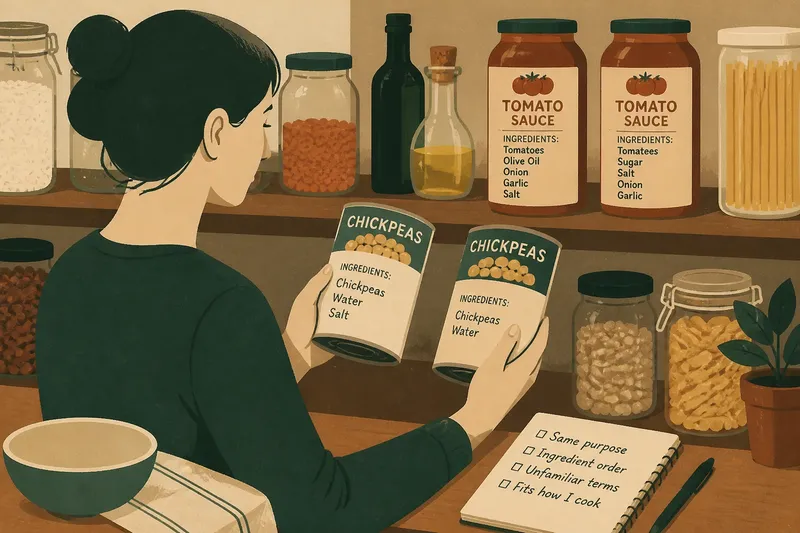
A pantry shelf read can make two similar jars or boxes easier to compare: look at the ingredients in order, then decide whether each item suits the food you make. You do not need to decode every technical-sounding term or choose the shortest list. The useful question is what the product contains and whether those ingredients matter in your kitchen.
What should you compare first?
Start with products that serve the same purpose. Compare one type of canned beans with another, or two jars of pasta sauce—not a sauce with a cooking paste. Similar products give the ingredient order a fairer context.
Pick up one pack, find the ingredient list, and read it from the first item to the last. Ingredients are generally listed in descending order by weight, so earlier items make up more of the product than later ones. The list does not tell you the exact amount of each ingredient, and it should not be treated as a recipe.
Now read the other pack the same way. Notice where the main food appears and whether salt, sweeteners, oil, or thickeners appear near the beginning or toward the end. A difference in order can tell you what to inspect more closely, but it does not by itself make one product a better choice.
What does ingredient order tell you?
Order offers a rough picture of emphasis. If tomatoes appear before added sugar in one pasta sauce, while sugar appears earlier in another, that is a concrete distinction to consider. It does not reveal the exact sweetness, flavor, or texture; those depend on the whole formula and how you use the sauce.
Also check whether an ingredient appears under more than one name or in more than one form. A product may list several sweetening ingredients separately, for example. Read the whole list before drawing a conclusion from a single item near the top.
Keep the product’s intended use in view. A broth meant to be used as a base may taste concentrated on its own, while a ready-to-eat soup is meant to be eaten as sold. Ingredient order is most useful as a comparison within a product type, not as a ranking across unrelated foods.
How can you handle unfamiliar terms?
Pause at a term you do not recognize, but do not assume that an unfamiliar name signals a problem. Some names identify familiar ingredients in a more technical way; others refer to additives used for a particular purpose. The ingredient list alone may not explain why an item is included.
Ask a small set of practical questions:
- Is the term a food ingredient, an additive, or a named component of another ingredient?
- Does it appear in both products, or only in one?
- Does the package describe a function, such as thickening or preserving?
- Does the term connect to a specific dietary need or ingredient you avoid?
- Would knowing more change which product you choose?
If the answer could affect an allergy or another health need, check the full label and consult a qualified professional when appropriate. For a general curiosity, use the manufacturer’s explanation or a reliable food-ingredient reference rather than guessing from a word’s sound. Label wording and ingredient names can vary by product and location.
Which pantry product fits the way you cook?
Choose by the job the ingredient will do, not by an abstract idea of a perfect label. A plain canned tomato may suit someone who wants to season a dish from scratch. A seasoned sauce may be useful when the meal needs to come together quickly, provided its ingredients fit the cook’s preferences.
Say you are choosing between two cans of chickpeas for a stew. Imagine one lists chickpeas, water, and salt, while the other lists chickpeas and water. If you usually season the stew yourself, the second may give you more control; if you are comfortable adjusting for salt, either could work. That is a choice based on your cooking routine, not proof that one can is universally superior.
Think about what you already keep on hand. If a product includes oil or seasoning you would otherwise add, it may simplify a particular meal. If those additions would clash with your recipe, a plainer option may be easier to adapt. The right comparison depends on the dish you have in mind.
What questions help you make the final choice?
Does a shorter ingredient list mean a better product?
Not necessarily. A short list may suit a cook who wants a simple base, while a longer one can include ingredients that provide flavor, texture, or preservation. Compare the items and their order against your own needs instead of using list length as a score.
Should I avoid every ingredient I cannot pronounce?
No. Pronunciation is not a useful measure of what an ingredient is or does. Look up a term if it matters to your diet, preferences, or understanding of the product.
Can ingredient order tell me how much salt or sugar is in a pack?
It shows relative order by weight, not exact quantities. If the amount matters to you, check the nutrition information and serving details on the package, using the same basis when comparing products.
What if two labels still look almost identical?
They may suit your cooking equally well. Consider the flavor you want, how much seasoning you plan to add, and whether either ingredient raises a concern for you; then choose the one that fits the meal.
How do you turn a shelf read into a useful habit?
Keep the comparison narrow and purposeful. Choose the meal or cooking task first, compare two or three products that do that job, and note only the differences that could affect your decision. There is no need to inspect every item in the pantry on one trip.
For a pantry shelf read, the practical result is a choice you can explain: a certain ingredient appears earlier, a term merits checking, or one product better suits the recipe you plan to cook. If none of those differences matters to you, the labels have done their job. Put the packs back and spend your attention on the meal itself.