Why Toasting Spices Changes Their Aroma
Why toasting spices changes their aroma depends on the spice and the dish. Learn when to use a dry pan, when to stop, and what to do next.
Toasting spices changes their aroma because heat releases some fragrant compounds and transforms others. For a cook, the useful question is not how long to toast every spice, but whether a spice belongs in a dry pan at all and what its changing smell is telling you.
What does toasting do to a spice?
Many spices hold aromatic compounds inside oils and plant tissues. Gentle heat makes those compounds easier to smell, so cumin seeds in a warm pan can seem more vivid than the same seeds straight from a jar. Heat can also alter compounds, creating new aromas that may read as nutty, earthy, warm, or roasted.
That change is not simply “more flavor.” A fresh, sharp note can soften, while a deeper scent emerges. The result depends on the spice, its form, how it was stored, the pan, and what the dish needs. Toasting is a choice about character, not a required upgrade.
Dry heat also removes moisture from the surface and quickly raises the temperature of small ingredients. That makes the process easy to overdo: a spice can move from fragrant to scorched before its appearance changes much. Smoke or a harsh, bitter smell is a sign to stop rather than wait for a timer.
Which situation calls for a dry pan?
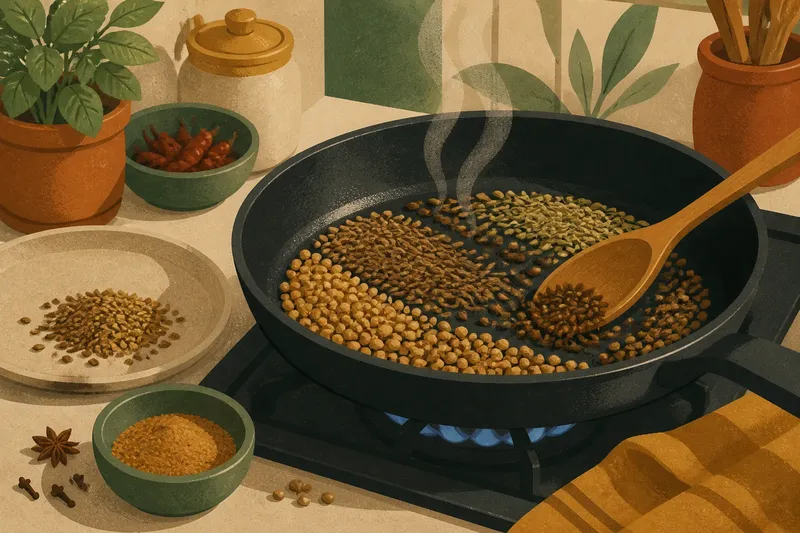
Use a dry pan when whole spices need a more pronounced, rounded aroma before they are ground or added to a dish. This can suit cumin, coriander, fennel, and mustard seeds, depending on the recipe. A heavy skillet or small stainless-steel pan makes it easier to notice gradual changes than a very thin pan that heats unevenly.
Keep the heat modest and the spices moving. Shake the pan or stir with a wooden spoon so one patch does not sit over the hottest part. Work in a small batch that can spread in a single layer; crowded spices are harder to move and may warm unevenly.
For ground spices, a dry pan is less forgiving because the fine particles heat quickly. If a recipe calls for them to be toasted, use low heat, stir continuously, and stop at the first clear aroma. Otherwise, adding the powder to warm oil, butter, or another cooking fat may fit better. Fat disperses many aromatic compounds through the dish and gives you a different result from dry-toasting.
When should spices meet oil, liquid, or no heat?
Choose the method that matches the recipe’s cooking sequence. Whole spices that are meant to flavor oil can go into the pan with the fat, where they release aroma as the fat warms. This is common in dishes that begin with a spiced cooking base. Keep the temperature controlled; hot fat can burn small seeds or powdered seasonings quickly.
Choose a dry toast when you want to intensify whole spices before grinding, or when the recipe specifically calls for that roasted note. Skip toasting when the spice’s bright, fresh character should remain prominent, when it is already going into a long-cooked dish, or when the recipe relies on a delicate aroma added near the end. A short infusion in warm liquid may suit some preparations better than direct pan heat.
Some spices are sold already toasted, roasted, or ground into blends. Toasting them again can flatten their aroma or make them bitter. Check the package and recipe before applying heat, and follow any specific handling directions from the manufacturer.
How do you know when to stop?
Let your nose lead, with sight and sound as supporting clues. Stay beside the stove and smell the pan as the spices warm. The aroma usually shifts from faint or raw toward distinct and inviting. Stop when that change is clear and the scent suits the dish; do not wait for every seed to darken.
- Faint scent: Keep the heat low and stir or shake the pan.
- Clear, rounded aroma: Remove the pan from the heat and transfer the spices to a cool plate. A warm pan continues cooking them.
- Sharp, acrid smell or visible smoke: Stop immediately. Do not try to cover a burnt aroma by adding more spices.
- Uneven color or a few seeds darkening early: Move the pan off the burner and stir. The pan may be heating unevenly.
Color varies with the spice, its age, and its natural appearance, so it is a poor universal finish line. Timing varies too. Pan material, burner strength, batch size, and whether the spice is whole or ground all affect how quickly it warms. Treat any timing in a recipe as a cue to start paying close attention, not as a rule that overrides your senses.
How should you handle spices after toasting?
Move toasted spices out of the hot pan promptly. If they are headed for a spice grinder or mortar, let them cool first; warm spices can release aroma into the air instead of staying in the dish, and hot ingredients may be awkward to handle. Grind only as much as the recipe needs when practical, since ground spices expose more surface area to air.
If the spices will season a stew, curry, or sauce, add them at the point the recipe intends. Toasting does not replace simmering, blooming in fat, or seasoning at the end. Each stage affects how aroma reaches the finished dish, and a toasted spice can still taste muted if it is used in the wrong way or has been stored poorly.
For a simple decision, say you are making a lentil dish that begins with whole cumin seeds in a dry skillet before grinding. Keep the seeds moving over gentle heat, and stop when their earthy scent becomes easy to notice; then cool and grind them. If the same recipe instead asks for cumin powder in warm oil, follow that method rather than dry-toasting the powder first.
What questions help you choose a toasting method?
Can you toast spices in the oven?
You can, especially for a larger amount of whole spices, but a skillet makes it easier to stir and respond to aroma quickly. If using an oven, spread spices in a single layer in a suitable pan and watch closely because they can continue warming after removal.
Should you toast whole spices before grinding?
That often makes sense when you want a warmer, more pronounced aroma, and many recipes specifically ask for it. Skip the step if the recipe uses a different flavoring method or if a fresher, less roasted character fits the dish.
Can you toast ground spices?
Yes, when a recipe calls for it, but ground spices heat faster and are easier to scorch than whole seeds. Use low heat, stir without stopping, and remove them as soon as their aroma becomes distinct.
What should you do if spices smell burnt?
Take the pan off the heat and do not stir the scorched material into the meal. If the spices are badly burnt, discard them and start again with a clean pan; a bitter, acrid aroma is difficult to disguise.
How does toasting fit the dish?
Think of toasting as one possible way to shape aroma. Choose a dry pan for whole spices when a roasted note is wanted, use fat when the recipe builds its seasoning in oil, and leave delicate or already-roasted spices alone when more heat would take them away from the intended flavor.
For anyone asking why toasting spices changes their aroma, the practical answer is that heat both releases and reshapes fragrant compounds, while the pace depends on what is in the pan. Watch the food, listen to the recipe’s sequence, and let a clear, pleasant scent—not a universal timer—decide when to stop.